
Author
Katie Mikova
Published posts 59Katie Mikova is a Tech and Developer Tools Content Expert at Infragistics with 11+ years of experience in content strategy and creation. She specializes in low-code development platforms, front-end frameworks, and generative AI, producing high-impact blogs, whitepapers, product documentation, and marketing content that connect UI/UX design, digital product development, and modern web technologies. Her expertise includes component-based architectures, responsive design principles, modern JavaScript frameworks, and developer-focused tooling, translating complex technical concepts into clear, practical insights. She is a regular contributor to App Builder, Infragistics, Medium, DZone, DevStyleR, DEVOPSdigest, ITware, Reddit, GitHub, where she shares thought leadership on UI/UX, web development trends, low-code platforms, and application development. Katie is also a Global Ambassador for the Women Tech Network, supporting initiatives that promote diversity, inclusion, and women’s leadership in technology. With a BA in English with Creative Writing from Falmouth University (UK), she brings a distinctive “content alchemist” approach to her work, combining analytical precision with creative thinking. Outside of tech, she enjoys snowboarding, books, geek culture, coffee. A lot of coffee.


Two of our most prominent app development tools have come together – Ignite UI and App Builder. Not as a collection of disconnected features, but as foundational drivers for AI-assisted application development, where Ignite UI meets AI and AI agents workflows to operate within a well-defined UI and application model.

To understand why developers move away from this library and what are the other options they explore, this article will take a practical, comparison-driven look at the most popular Angular Material alternatives for 2026.

The right UI library influences development speed, maintainability, and user experience. In the Angular Material vs PrimeNG decision, we can say that both options serve different purposes. Let's dive deep and explore each.

Material UI remains the default option for many developers and teams. But what happens when you look for enterprise-grade capabilities and tools that empower you to build data-heavy applications?
Is Ant Design really enough when you have to build more complex, data-rich and modern-looking applications? Are grid controls comprehensive enough and do they deliver the required features and performance?
PrimeNG remains a capable starting point, but as your Angular apps scale, you may need a solution that offers better performance, design flexibility, and enterprise-grade reliability.
An Angular Progressive Web App is a web application enhanced with native-like features such as offline access, background synchronization, etc. And this blog post shows you how to build one.
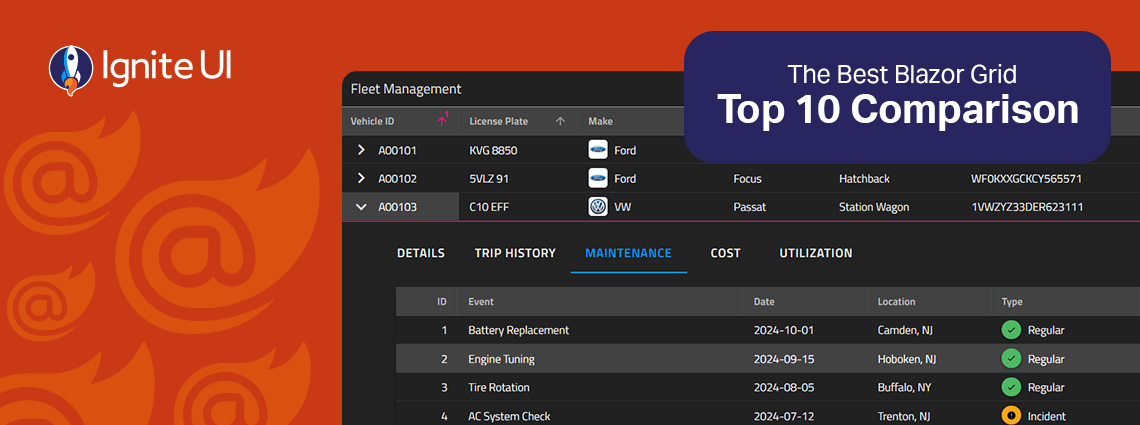
Fast and powerful Blazor data grid components are essential when building high-performance and data-driven applications. But with so many available controls on the market today, choosing the right one feels a bit challenging.
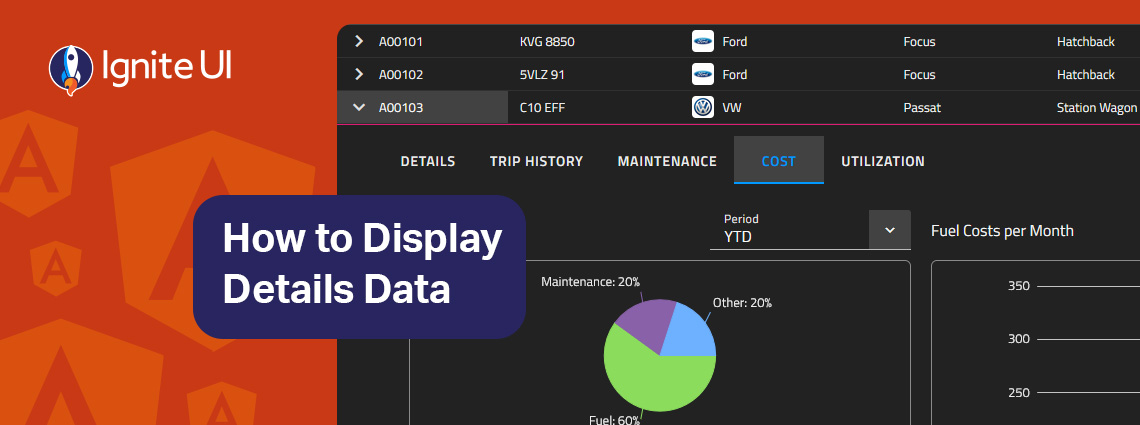
How can you easily display details data on-demand? In this blog post we demonstrate the exact steps, using Ignite UI for Angular Hierarchical Grid. Read more and explore code snippets and examples.
This article lists a mix of 10 Angular app examples that showcase the framework's versatility. See the Angular's strengths applied in action combined with Ignite UI for Angular.